When to Replace Your Skate Helmet
Your helmet has protected you through countless landings, bails, collisions, and crashes. But is it still keeping you safe? Whether you’re skating at the park, on the derby track, or cruising through the streets, your helmet has one important job: protect your head when things go wrong. However, over time, the materials that make up your helmet can wear down or become damaged. Identifying the signs of deterioration can help you determine whether or not it's time for a replacement.

How Long Do Skate Helmets Last?
There is not a universal expiration date that applies for every helmet. How often you ride, how you store your helmet, and the amount of exposure to environmental factors can all affect its lifespan. As a general guideline, three years is a reasonable point to consider replacing a helmet, even if it appears to be in good condition. Materials gradually deteriorate over time, which affects the helmet's ability to protect your head.
No matter where or how you ride, this guide can help you check your helmet to see if it's reached its expiration date.
Signs It's Time to Replace Your Skate Helmet
The most important component inside any helmet is the EPS (expanded polystyrene) foam. This foam is located inside the helmet shell and is specifically designed to absorb energy during impact. Any damage or deterioration of the EPS foam can compromise the helmet's protective performance. Be sure to remove any pads or liners covering the foam, then look for the following warning signs:
Start with the Inside
1. Cracked, Dented, or Compressed EPS Foam
Carefully inspect the EPS foam for visible cracks, dents, and crushed areas. The EPS foam is designed to compress during any impact, so any signs of damage could mean your helmet may not provide adequate protection.
2. Soft Spots
Gently press on different areas of the foam. If you notice that certain areas are softer, weaker, or more pliable than others, then this indicates that the EPS foam has deteriorated.
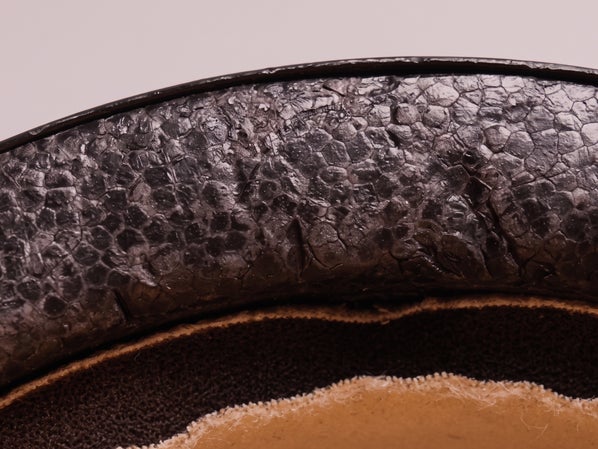
Small cracks and fissures are an early sign of wear and tear
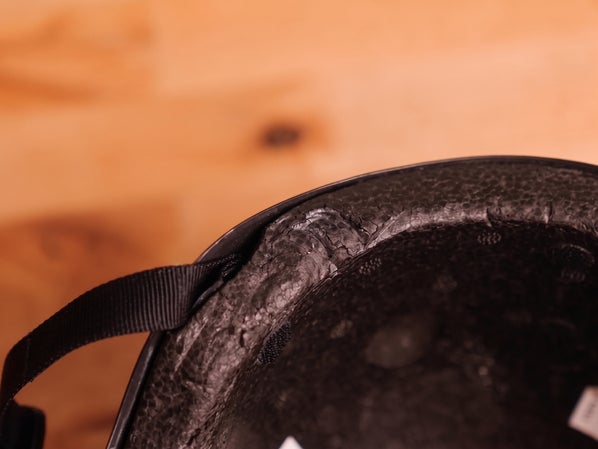
Compressed or condensed EPS foam won't offer full protection
3. Discoloration
Look for unusual changes in the color of the foam, specifically yellowing or dark spots. Discoloration could indicate that the materials are breaking down.
4. Foam Separation from the Shell
Check the connection between the liner and the helmet's shell. The components should remain properly secured together. Any separation can compromise the helmet's integrity.
5. Age
Even a helmet that looks fine ages internally. Repeated exposure to sunlight, sweat, products in your hair, oils, and other environmental factors can contribute to material degradation, which reduces the helmet’s ability to provide proper protection.
6. Unusual Odors
A helmet that smells like a hard day of skating is completely normal. However, if you notice a strange stench coming from the foam, this is a sign that the materials are deteriorating.
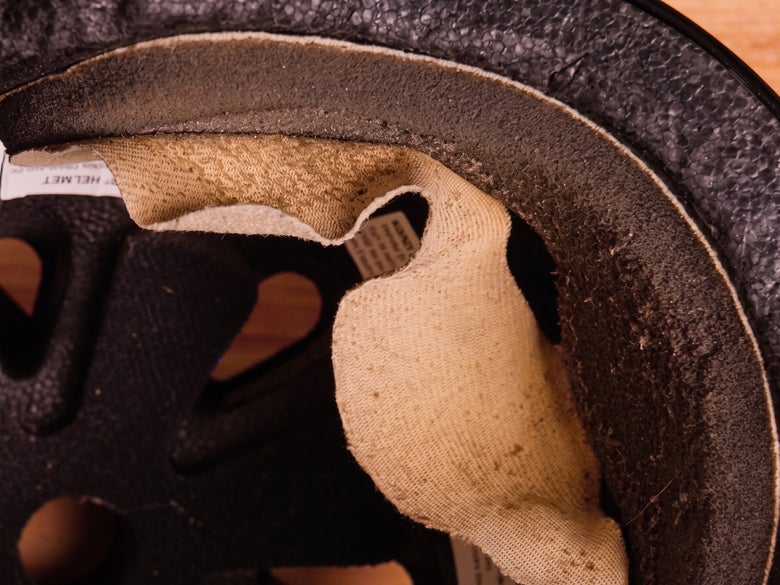
Soft foam and fabric liners will show early signs of wear and tear, but can be easily replaced.
Inspect the Outer Shell
If your helmet has been involved in a significant crash or impact, replace it even if you can't see any obvious damage. The EPS foam can become compromised without showing visible cracks or deformation. If you've ever taken a spill that made you stop and think “Holy cow, I'm so glad I was wearing my helmet”, it's definitely time for a replacement.
Make sure you look for external damage to the shell of your helmet. A few scuffs and scratches is to be expected. However, cracks, dents, deep damage, or missing pieces are considered significant damage and are signs you need a new helmet.
Check and see if the straps, clips, or strap adjusters are frayed, torn, or damaged. In addition, double-check that all of the components fasten correctly and securely. Damaged adjustment hardware can prevent the helmet from staying properly positioned during a fall.
Check the Fit
When it comes to helmets, one size does not fit all - Your helmet should feel as close to your head as possible. As a general fit check, the front of a helmet should sit approximately one finger's width above your eyebrows. Your helmet should not rock forwards, backwards, or side-to-side.
Skate Helmet Replacement FAQ
Do skate helmets expire?
Helmet lifespan can vary, so there’s no universal expiration date. Check the helmet manufacturer's recommendations for its suggested replacement interval and replace it sooner if you notice significant damage, deterioration, or changes in fit.
Should I replace my skate helmet after a crash?
A helmet should be replaced after a solid hit, even if there isn't obvious external damage. The impact-absorbing material inside the helmet may have compressed or become damaged during the crash. Replacing your helmet after a substantial fall or a heavy hit helps ensure it continues to provide the protection you need when it matters most.
Can I still use a skate helmet with a cracked shell?
No - Cracks, significant dents, missing pieces, or other major shell damage are surefire signs that it's time to get a new helmet.
How should a skate helmet fit my head?
Your helmet should fit snugly and sit level on your head without rocking forward, backward, or side to side. As a general fit check, the front of the helmet should sit approximately one finger's width above your eyebrows.
Never risk it! Retire your helmet if you have any doubts about its safety. Inspect it, check the fit, replace it when it's done its job, then get back out there and skate safe.