Three-Wheel vs. Four-Wheel Inline Skates
Which Setup Is Right for You?
When choosing between three- and four-wheel inline skates, the biggest difference comes down to wheel size, frame length, stability, and maneuverability. Neither setup is universally better, so the right choice depends on your skating experience, goals, and preferred style.
As a general rule, a lower setup provides more stability. Aggressive skating requires stability, which is why aggressive skates have lower setups and smaller wheels. For beginners and returning skaters, four-wheel inline skates with smaller wheels (typically around 80–84mm) can provide a more approachable platform for building confidence and developing skills.
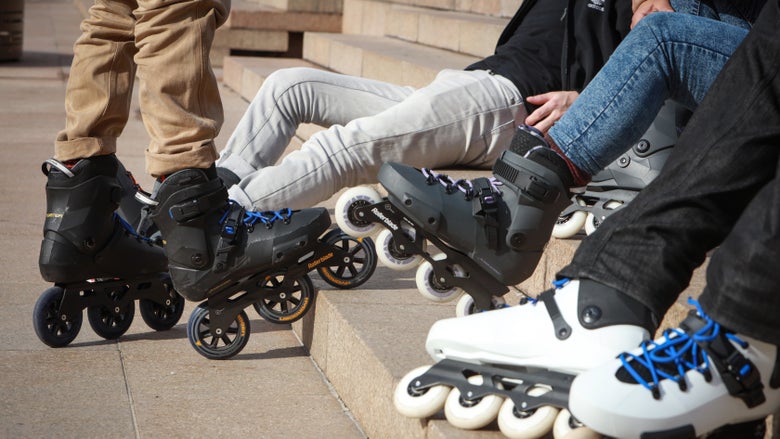
Why Choose Four-Wheel Skates?
Most four-wheel inline skates are built around longer frames, which translates to a more stable and predictable ride. The longer frames make them a great choice for straight-line fitness, cross-training, or marathon skating, where stability at higher speeds is important. For beginners, four-wheel setups can be beneficial since they have more points of contact with the ground, helping improve your feel for each push-off. They’re also a good option for skaters who skate in a more upright stance or for skaters who tire easily, as the longer frame provides a stable platform that makes it easier to slow down, recover, and take breaks.
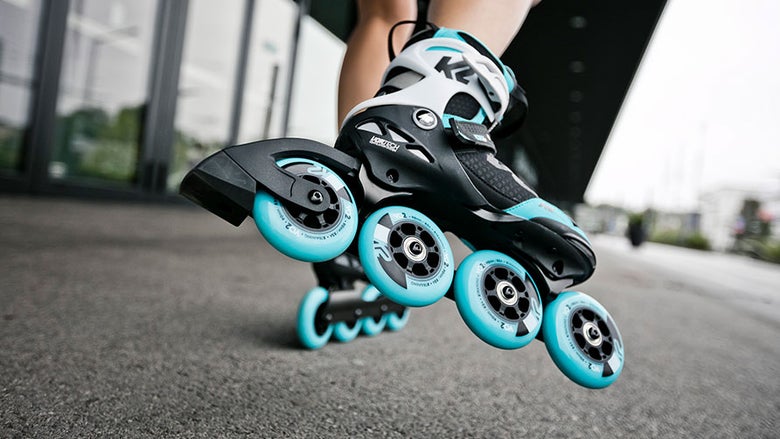
Four-wheel inline skates are particularly well suited for:
- Beginners and returning skaters
- Fitness, speed skating, and cross-training
- Skaters who prioritize stability at higher speeds
- Urban, slalom, or freestyle skaters using smaller wheels for quick direction changes
Smaller four-wheel setups can feel responsive and easy to control, making it easier to accelerate, slow down, and change direction. Longer frames, meanwhile, provide a solid platform that can be especially comfortable during longer sessions.
Why Choose Three-Wheel Inline Skates?
Three-wheel inline skates make it possible to use larger wheels without creating an excessively long frame. Larger wheels roll faster, carry momentum longer, and handle cracks, bumps, and rough pavement more easily for a smoother outdoor ride.
The trade-off is that larger wheels can require more effort and control, particularly when accelerating, slowing down, or maintaining proper skating technique.
The shorter frames typically paired with three-wheel setups balance out the larger wheels, delivering a responsive ride with plenty of maneuverability. This combination of big wheels and compact frames has made three-wheel inline skates popular with skaters looking for speed without giving up agility.
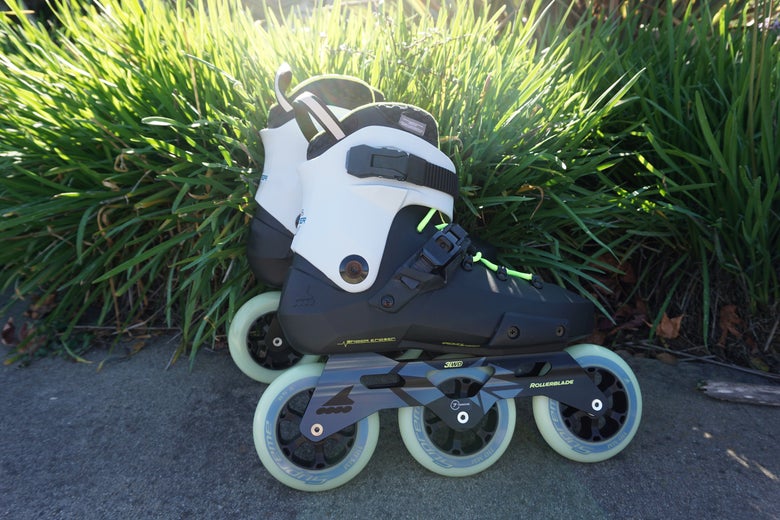
Three-wheel inline skates are a strong option for:
- Long outdoor skating sessions
- Fitness and cross-training
- Skaters who want more speed and roll
- Rougher pavement and uneven surfaces
Three-wheel setups can also reduce overall weight by using one fewer wheel and less supporting hardware.
| Benefits | 3-Wheel Skates | 4-Wheel Skates |
| Speed | Strong | Moderate to strong |
| Maneuverability | High | High, depending on frame |
| Acceleration | Requires more technique with larger wheels | Typically easier |
| Balance & Stability | Depends on wheel size and frame | Typically more stable |
| Outdoor Terrain | Excellent with larger wheels | Good, with appropriate wheels |
| Braking | Requires good control | Typically easier |
| Skill Level | Better suited for experienced skaters | Generally better for beginners |
Three-Wheel vs. Four-Wheel Inline Skates: Which Should You Choose?
Choose four wheels if you want a stable, predictable setup that is easy to control, particularly if you're learning, returning to skating, or if you prioritize stability when fitness skating.
Choose three wheels if you want larger wheels, more speed and roll, and a smoother ride over outdoor terrain while still maintaining good maneuverability.
Your skating technique also matters. Larger three-wheel setups generally benefit from a stronger skating stance with bent knees and good control, while smaller four-wheel setups can feel more forgiving for newer skaters.
You May Not Have to Choose
Don’t stress about being stuck with one or the other. Many inline skates feature removable frames, allowing you to swap between compatible setups. Depending on the skate, you may be able to change to a different frame, wheel size, or even switch between three- and four-wheel configurations.
If your skates have a fixed frame, simply choose the setup that matches your current ability and skating goals. As your skills develop, you can always move into a different configuration later.
Frequently Asked Questions About Three- and Four-Wheel Inline Skates
Are three-wheel inline skates faster than four-wheel skates?
Three-wheel inline skates often use larger wheels, which can help maintain higher speeds and carry momentum longer. However, speed also depends on wheel hardness, frame design, bearings, skating technique, and the skater's ability.
Are four-wheel inline skates better for beginners?
Four-wheel skates are a good option for beginners because smaller wheels and many four-wheel frames provide a stable, predictable platform. Four-wheel skates can make it easier to develop balance, control, stopping, and basic skating technique.
Are three-wheel inline skates harder to skate?
Three-wheel skates aren't necessarily harder to skate, but they can require more control and stronger skating technique due to their larger wheels. New skaters may find smaller wheels easier to manage while they build confidence and balance.
Which is better for outdoor skating: three or four wheels?
Both setups can work well outdoors. Three-wheel inline skates with larger wheels are particularly useful for rough pavement, cracks, and uneven surfaces, while four-wheel inline skates can provide a stable and controlled ride with smaller wheels.
Can you put three wheels on four-wheel inline skates?
Some inline skates have interchangeable frames that allow you to switch between three- and four-wheel configurations. Compatibility depends on the skate's frame mounting system, frame length, and wheel clearance, so always check the manufacturer's specifications before making a frame change.
Ultimately, choosing between three-wheel and four-wheel inline skates comes down to your skating style, experience, and where you plan to skate. Four-wheel setups offer a stable, predictable platform that can be especially approachable for beginners and fitness skaters, while three-wheel skates provide the benefits of larger wheels, increased roll, and excellent outdoor performance. Consider your goals, terrain, and preferred ride characteristics to find the inline skate setup that's right for you.