What Are the Most Popular
Hockey Stick Tape Jobs?
Here are some of the most popular ways players tape their knobs, handles, and blades. These are great starting points for players who want to find a setup that feels comfortable, improves control, and matches their personal preference on the ice. From simple, traditional tape jobs to more customized styles, each method offers a slightly different feel in the hands or for the puck, giving players plenty of room to experiment and build on what works best for their game.

Knob
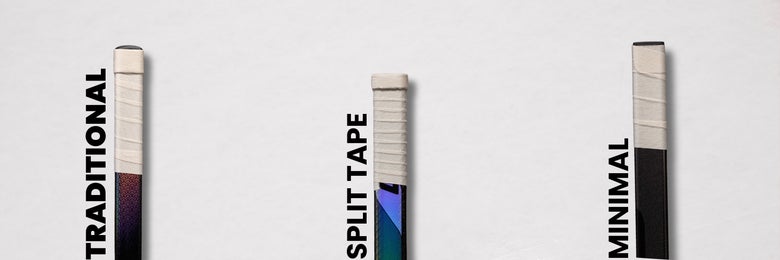
Traditional
A traditional knob is the most common style and uses enough tape to create a noticeable knob at the top of the stick. It gives players a secure feel in the top hand, helps prevent the stick from slipping during play, and adds a comfortable level of control for shooting, passing, and stickhandling. This is a great starting point for new players because it offers a balanced feel without being too bulky or too minimal.
Split Tape
A split tape knob creates a smaller, more low-profile version of a traditional knob by tearing the tape lengthwise or using split tape before wrapping it. This gives players a little grip at the top of the shaft without building up too much thickness. It is a good option for players who still want that stopping point for their top hand but prefer a more subtle feel with slightly better hand mobility.
Minimal
A minimal knob uses very little tape, often just a single wrap or two around the top of the shaft. Players who like a clean, lightweight feel often prefer this style because it keeps the top of the stick simple and less bulky in the hands. For new players, it can feel less restrictive, though it does not provide as much grip or hand security during stick battles as a larger traditional knob.

Handle
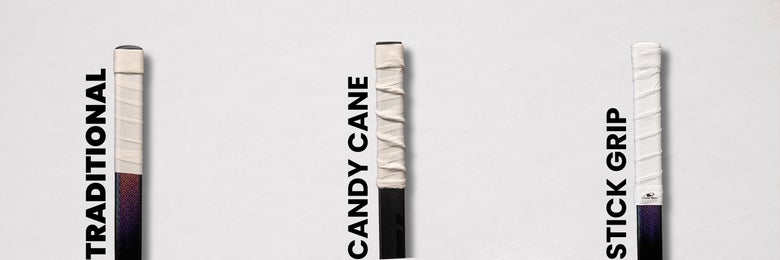
Traditional
A traditional handle wrap uses a single layer of tape directly below the knob, usually extending about 3 to 5 inches down the shaft. It gives players a clean, classic grip with a little extra hold for the top hand without adding too much bulk. This is a great option for new players because it feels natural, is easy to apply, and provides a solid mix of comfort and control.
Candy Cane
A candy cane grip is made by twisting the tape into a rope-like strand and wrapping it in a spiral down the handle. This creates raised ridges that sit between the fingers, giving players a more textured grip and a stronger feel of where their hand is positioned on the stick. Many players like this style because it can improve grip and control, especially during quick stickhandling movements, though it does create a more pronounced feel in the hands.
Stick Grip
A stick grip replaces traditional cloth tape with a pre-made grip material that is designed to improve comfort, tackiness, and overall feel. These grips often feel softer and more consistent than tape, and they can be a great option for players who want extra comfort in their top hand or do not want to re-tape their handle as often. For many players, stick grips can be an easy, low-maintenance way to get a comfortable and secure hold on the stick.
Blade
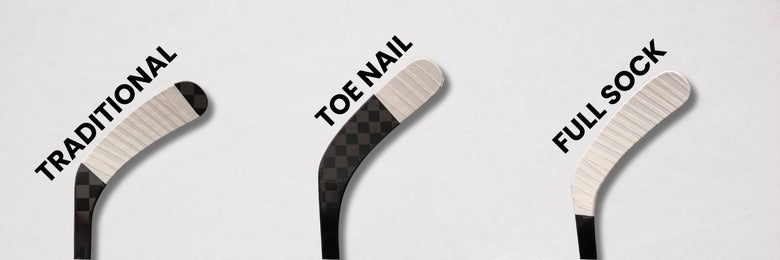
Traditional
A traditional blade tape job is the most common style and covers the blade from the heel to the toe while usually leaving a small portion of the very end exposed. It provides solid puck feel, reliable coverage, and a clean, balanced setup that works well for nearly every type of player. For new players, this is the easiest place to start because it offers a consistent feel along the blade, which provides great performance for shooting, passing, and stickhandling.
Toenail
A toe nail tape job begins around the middle of the blade and continues through the toe, leaving more of the heel uncovered for a lively puck feel when stickhandling. Players often choose this style when they want extra coverage and control around the toe, which is a key contact point for toe drags and shots released off the toe. It also uses less tape than a full traditional wrap to help save weight while still protecting one of the most active parts of the blade.
Full Sock
A sock tape job provides the most blade coverage of the three, usually starting near the hosel and continuing all the way over the end of the toe. Once finished, it gives the blade a fully wrapped look, almost like it is wearing a sock. Players who prefer maximum coverage often like this style because it protects more of the blade and creates a very uniform taped surface, though it also uses the most tape, which adds weight to the blade.
Popular Hockey Stick Tape Jobs FAQ's
What is the best hockey stick tape job for beginners?
A traditional knob, handle, and blade tape job is the best starting point for most beginners. They provide a balanced feel, consistent grip, and solid puck control without getting too specialized.
Why do players tape the knob of their hockey stick?
The knob helps keep the top hand from sliding off the stick and gives players a more secure grip. It can also improve comfort and control when shooting, passing, and stickhandling.
What is the difference between a traditional knob and a minimal knob?
A traditional knob creates a more noticeable knob shape at the top of the shaft, while a minimal knob uses very little tape and feels less bulky. Players who want more grip often prefer traditional, while players who like a cleaner feel may prefer minimal.
What is split tape on a hockey stick knob?
Split tape is cloth tape that has been divided lengthwise before being wrapped around the stick. It creates a smaller, lower-profile knob that still gives players some grip at the top without building up as much thickness.
What is a candy cane hockey stick grip?
A candy cane grip is made by twisting tape into a rope-like strand and spiraling it down the handle. This creates raised ridges that can improve grip and help players feel their hand placement more clearly.
What is a stick grip, and how is it different from tape?
A stick grip is a pre-made grip material that replaces traditional cloth tape on the handle. It usually provides a softer, more consistent feel and can last longer without needing to be replaced as often. Stick grips can also help extend the life of hockey glove palms since the material is less abrasive and does not wear them down as quickly.
What is the most common blade tape job?
The traditional blade tape job is the most common. It covers the blade from heel to toe, usually leaving a small portion of the end exposed, and offers a balanced mix of puck feel, coverage, and protection.
What is a toenail tape job?
A toenail tape job starts around the middle of the blade and wraps through the toe, leaving more of the heel exposed. Players like it for its cleaner puck feel, lighter weight, and extra control around the toe for toe drags and toe shots.
What is a sock tape job on a hockey stick blade?
A sock tape job covers nearly the entire blade, often from near the hosel all the way over the toe. It offers the most coverage and protection, giving the blade a fully wrapped look.
Does using more tape on the blade change how the stick feels?
Yes, more tape can slightly change puck feel and add a bit of weight to the blade. Some players like the added coverage and uniform feel, while others prefer less tape for a lighter, more direct puck touch.